
0
Shopping cart
You have no items in your cartSetting
Language
Currency
| Botanical Name | Vitex agnus-castus |
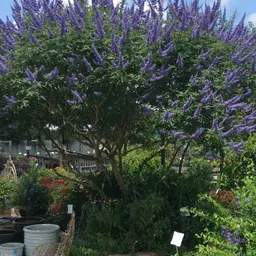
| Description | Often called the "Texas Lilac," the Vitex is a rugged, deciduous small tree that thrives in the intense sun of the Houston metro area. This substantial 30-gallon (30G) specimen offers an immediate, multi-trunked presence in the landscape. From late spring through summer, it produces long, upright spikes of fragrant purple flowers that are irresistible to butterflies, bees, and hummingbirds. Its grey-green, palmate leaves are also aromatic when crushed. Extremely tough and adaptable, the Vitex is an excellent choice for xeriscaping or as a focal point in sunny garden beds where water-wise plants are a priority. |
| Exposure | Full Sun (Required for best blooming) |
| Height x Width | 15-20' Height x 15-20' Width |
| Water | Low to Moderate; once established, it is exceptionally drought-tolerant. It prefers well-drained soil and does not like to sit in soggy, low-lying areas. |
| Zones | 6 - 9 |
| Fertilization | Apply a general-purpose, slow-release fertilizer in early spring to encourage a heavy bloom cycle. |
| Pruning | Prune in late winter to shape or to encourage a more tree-like form. "Deadheading" (removing spent flower spikes) in mid-summer can often trigger a second flush of blooms. |
| Deer Resistance | High |
| Botanical Name | Vitex agnus-castus |
| Description | Often called the "Texas Lilac," the Vitex is a rugged, deciduous small tree that thrives in the intense sun of the Houston metro area. This substantial 30-gallon (30G) specimen offers an immediate, multi-trunked presence in the landscape. From late spring through summer, it produces long, upright spikes of fragrant purple flowers that are irresistible to butterflies, bees, and hummingbirds. Its grey-green, palmate leaves are also aromatic when crushed. Extremely tough and adaptable, the Vitex is an excellent choice for xeriscaping or as a focal point in sunny garden beds where water-wise plants are a priority. |
| Exposure | Full Sun (Required for best blooming) |
| Height x Width | 15-20' Height x 15-20' Width |
| Water | Low to Moderate; once established, it is exceptionally drought-tolerant. It prefers well-drained soil and does not like to sit in soggy, low-lying areas. |
| Zones | 6 - 9 |
| Fertilization | Apply a general-purpose, slow-release fertilizer in early spring to encourage a heavy bloom cycle. |
| Pruning | Prune in late winter to shape or to encourage a more tree-like form. "Deadheading" (removing spent flower spikes) in mid-summer can often trigger a second flush of blooms. |
| Deer Resistance | High |