0
Shopping cart
You have no items in your cartSetting
Language
Currency
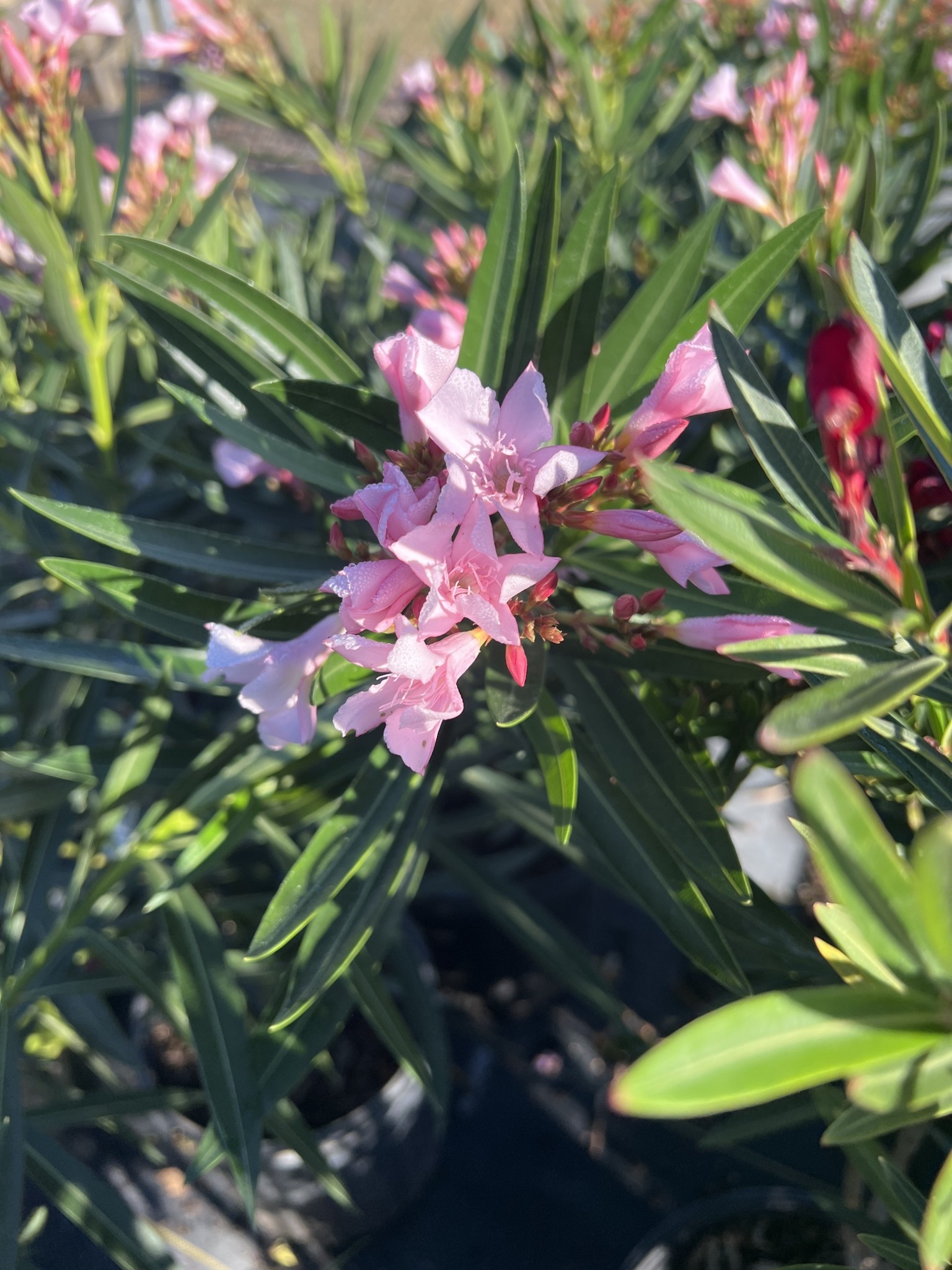
| Botanical Name | Nerium oleander 'Petite Pink' |
| Description | A compact, mound-forming evergreen prized for its long blooming season and extreme durability. It is one of the most heat-resilient plants for the Texas Gulf Coast. While it adapts to poor soils and heavy clay, it requires good drainage to avoid root issues. Note: All parts of the plant are toxic if ingested. |
| Exposure | Full Sun (Required for best bloom production and dense habit) |
| Height x Width | 3-4' Height x 3-4' Width |
| Water | Low once established. Highly drought-tolerant; avoid overwatering once roots are set. |
| Zones | 8 - 11 |
| Fertilization | Lightly apply a balanced fertilizer in spring; avoid excessive nitrogen which can reduce flowering. |
| Pruning | Prune after flowering in late summer to maintain size and shape. Wear gloves when handling. |
| Deer Resistance | High |
| Botanical Name | Nerium oleander 'Petite Pink' |
| Description | A compact, mound-forming evergreen prized for its long blooming season and extreme durability. It is one of the most heat-resilient plants for the Texas Gulf Coast. While it adapts to poor soils and heavy clay, it requires good drainage to avoid root issues. Note: All parts of the plant are toxic if ingested. |
| Exposure | Full Sun (Required for best bloom production and dense habit) |
| Height x Width | 3-4' Height x 3-4' Width |
| Water | Low once established. Highly drought-tolerant; avoid overwatering once roots are set. |
| Zones | 8 - 11 |
| Fertilization | Lightly apply a balanced fertilizer in spring; avoid excessive nitrogen which can reduce flowering. |
| Pruning | Prune after flowering in late summer to maintain size and shape. Wear gloves when handling. |
| Deer Resistance | High |