0
Shopping cart
You have no items in your cartSetting
Language
Currency
| Botanical Name | Quercus macrocarpa |
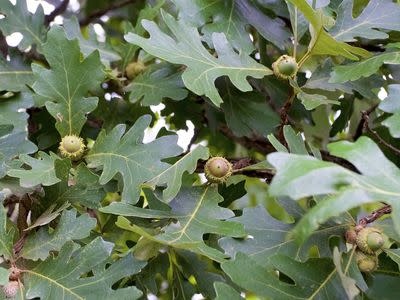
| Description | The Bur Oak is a titan of the Texas landscape and one of the most durable native oaks for the Houston metro area. This 30-gallon (30G) specimen is an ideal size for establishing a legacy tree in your yard. It is easily identified by its massive, deeply lobed leaves and distinctive "mossy-cup" acorns, the largest of any North American oak. Highly adaptable to various soil types, including heavy Houston clay, it is incredibly heat and drought-tolerant. Its corky bark and wide-spreading canopy make it a spectacular focal point for any property. |
| Exposure | Full Sun |
| Height x Width | 70-80' Height x 60-80' Width |
| Water | Moderate; requires regular watering to establish its deep taproot, but once established, it is one of the most drought-hardy oaks available for Southeast Texas. |
| Zones | 3 - 9 |
| Fertilization | Apply a balanced, slow-release fertilizer in early spring to encourage steady canopy growth. |
| Pruning | Minimal; prune during dormancy (late winter) to maintain a strong central leader and remove any low-hanging branches as the tree gains height. |
| Deer Resistance | Moderate |
| Botanical Name | Quercus macrocarpa |
| Description | The Bur Oak is a titan of the Texas landscape and one of the most durable native oaks for the Houston metro area. This 30-gallon (30G) specimen is an ideal size for establishing a legacy tree in your yard. It is easily identified by its massive, deeply lobed leaves and distinctive "mossy-cup" acorns, the largest of any North American oak. Highly adaptable to various soil types, including heavy Houston clay, it is incredibly heat and drought-tolerant. Its corky bark and wide-spreading canopy make it a spectacular focal point for any property. |
| Exposure | Full Sun |
| Height x Width | 70-80' Height x 60-80' Width |
| Water | Moderate; requires regular watering to establish its deep taproot, but once established, it is one of the most drought-hardy oaks available for Southeast Texas. |
| Zones | 3 - 9 |
| Fertilization | Apply a balanced, slow-release fertilizer in early spring to encourage steady canopy growth. |
| Pruning | Minimal; prune during dormancy (late winter) to maintain a strong central leader and remove any low-hanging branches as the tree gains height. |
| Deer Resistance | Moderate |