0
Shopping cart
You have no items in your cartSetting
Language
Currency
| Botanical Name | Viburnum obovatum |
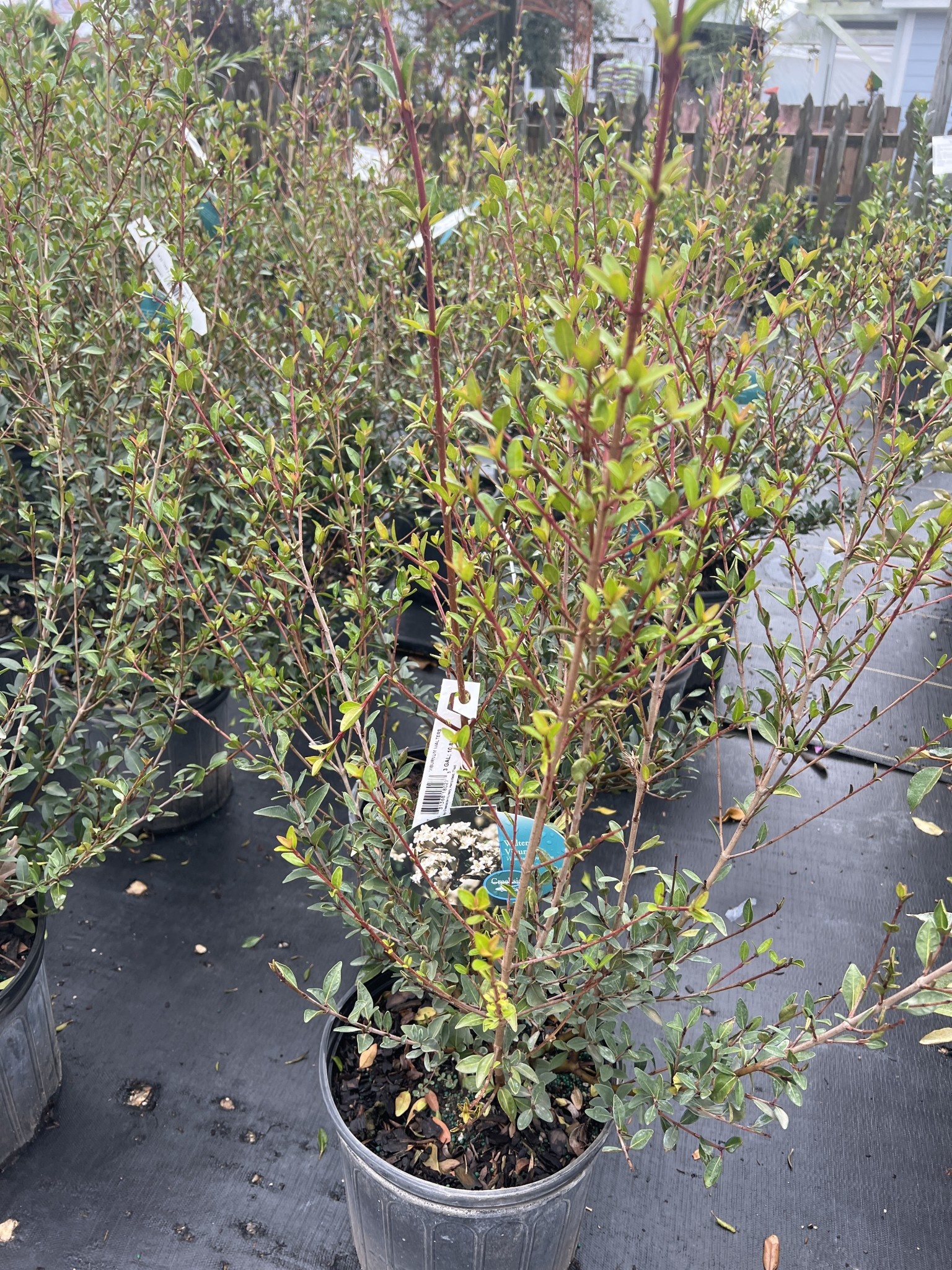
| Description | A resilient native to the Southeast, Walter's Viburnum is excellent for the Houston metro area. It is particularly valued for its ability to handle both moist conditions and periodic drought. It adapts well to various soil types, including heavy clay, but performs best in slightly acidic soil. Its dense habit makes it a top choice for natural screens or thick hedges. |
| Exposure | Full sun to partial shade |
| Height x Width | 8-12 ft. Tall x 6-10 ft. Wide |
| Water | Moderate; once established it is quite drought-tolerant but enjoys consistent moisture during the peak of Houston's summer. |
| Zones | 7 - 10 |
| Fertilization | Apply a balanced, slow-release fertilizer in early spring before new growth appears. |
| Pruning | Best pruned immediately after flowering in late spring to maintain desired size and shape. |
| Deer Resistance | Moderate |
| Botanical Name | Viburnum obovatum |
| Description | A resilient native to the Southeast, Walter's Viburnum is excellent for the Houston metro area. It is particularly valued for its ability to handle both moist conditions and periodic drought. It adapts well to various soil types, including heavy clay, but performs best in slightly acidic soil. Its dense habit makes it a top choice for natural screens or thick hedges. |
| Exposure | Full sun to partial shade |
| Height x Width | 8-12 ft. Tall x 6-10 ft. Wide |
| Water | Moderate; once established it is quite drought-tolerant but enjoys consistent moisture during the peak of Houston's summer. |
| Zones | 7 - 10 |
| Fertilization | Apply a balanced, slow-release fertilizer in early spring before new growth appears. |
| Pruning | Best pruned immediately after flowering in late spring to maintain desired size and shape. |
| Deer Resistance | Moderate |