0
Shopping cart
You have no items in your cartSetting
Language
Currency
| Botanical Name | Anisacanthus quadrifidus var. wrightii |
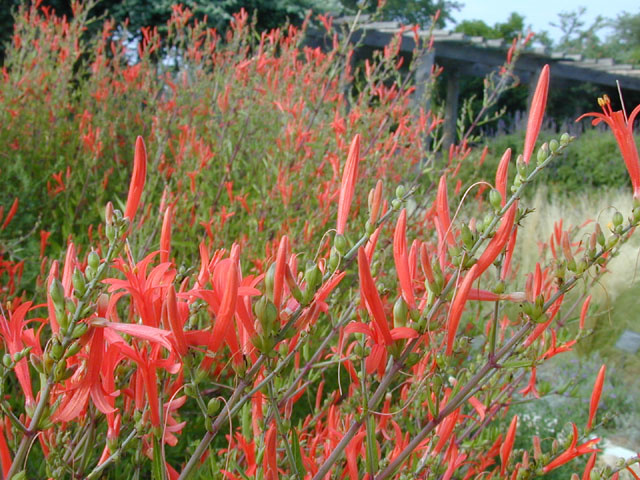
| Description | Commonly known as Wright's Desert Honeysuckle, this Texas native is celebrated for its extreme heat tolerance and ability to thrive in the Houston metro area. While it is highly drought-tolerant once established, it is remarkably adaptable to various soil types, including the area's heavier clays, provided there is reasonable drainage. It features a sprawling habit and a profusion of flame-colored flowers that last through the hottest months of the year. |
| Exposure | Full Sun to Partial Shade (Best flowering occurs in Full Sun) |
| Height x Width | 3-4 feet tall x 3-4 feet wide |
| Water | Low to Moderate; very drought-tolerant but enjoys occasional deep watering in summer. |
| Zones | 7 - 10 (Deciduous; very winter hardy for the Houston region) |
| Fertilization | Minimal requirements; a light application of compost or balanced fertilizer in spring is sufficient. |
| Pruning | Can be cut back severely in late winter to encourage a bushier habit and more prolific blooms. |
| Deer Resistance | High |
| Botanical Name | Anisacanthus quadrifidus var. wrightii |
| Description | Commonly known as Wright's Desert Honeysuckle, this Texas native is celebrated for its extreme heat tolerance and ability to thrive in the Houston metro area. While it is highly drought-tolerant once established, it is remarkably adaptable to various soil types, including the area's heavier clays, provided there is reasonable drainage. It features a sprawling habit and a profusion of flame-colored flowers that last through the hottest months of the year. |
| Exposure | Full Sun to Partial Shade (Best flowering occurs in Full Sun) |
| Height x Width | 3-4 feet tall x 3-4 feet wide |
| Water | Low to Moderate; very drought-tolerant but enjoys occasional deep watering in summer. |
| Zones | 7 - 10 (Deciduous; very winter hardy for the Houston region) |
| Fertilization | Minimal requirements; a light application of compost or balanced fertilizer in spring is sufficient. |
| Pruning | Can be cut back severely in late winter to encourage a bushier habit and more prolific blooms. |
| Deer Resistance | High |