
0
Shopping cart
You have no items in your cartSetting
Language
Currency
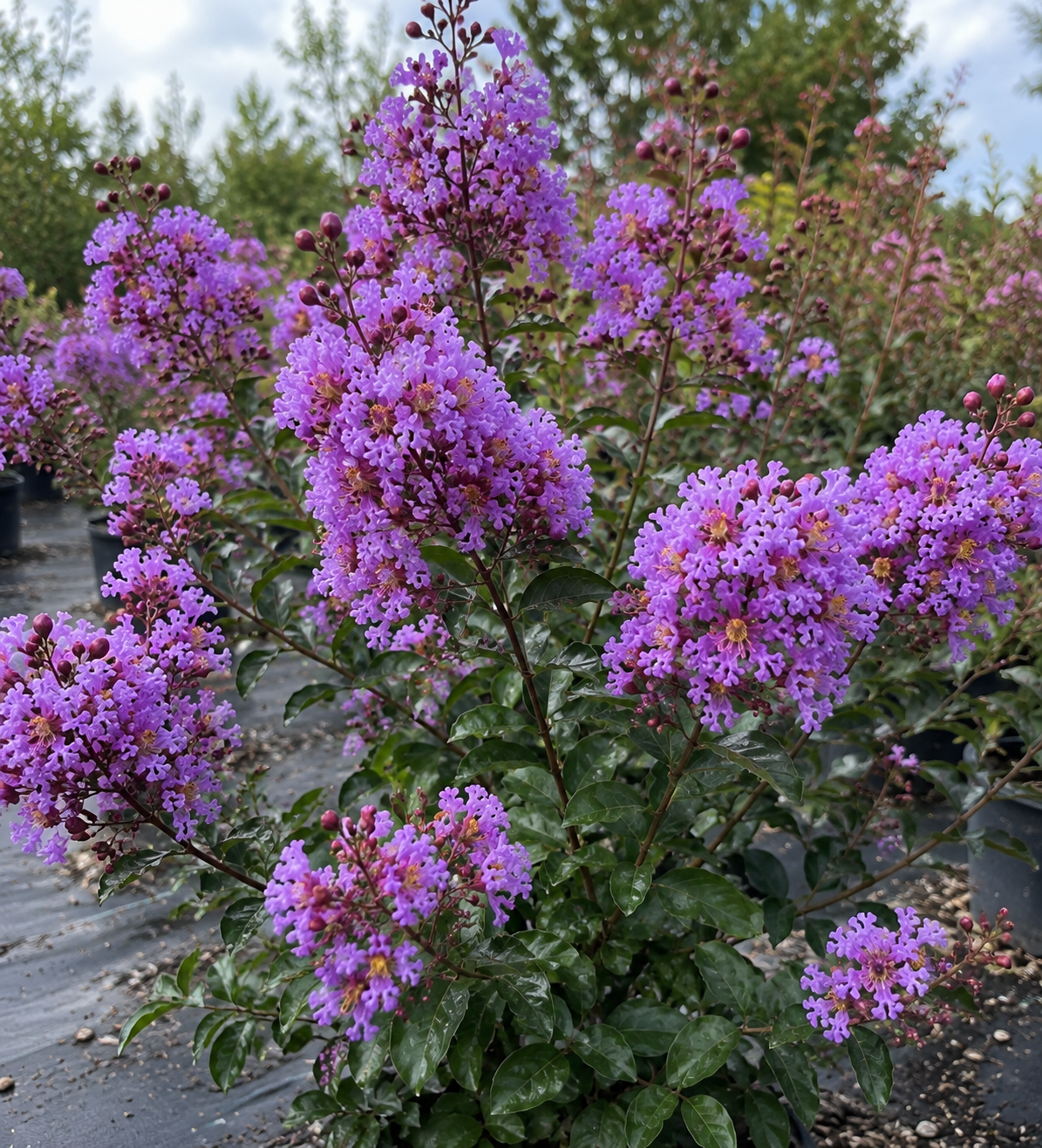
| Botanical Name | Lagerstroemia 'Lavender Skies' (Thunderstruck™ Series) |
| Description | This striking variety stands out in the Houston metro area with its unique combination of dark, ebony-hued foliage and brilliant lavender flowers. It is specifically bred for high resistance to powdery mildew, making it an ideal choice for our high-humidity environment. While it is adaptable to many soil types, it performs best when planted in well-drained areas; if your site has heavy clay, amending the soil or planting in a slightly raised mound will ensure the best long-term health. |
| Exposure | Full Sun (Required for the darkest foliage color) |
| Height x Width | 10-12 feet Tall x 8-10 feet Wide |
| Water | Moderate; drought tolerant once established, but requires regular deep watering during its first few seasons in the Texas heat. |
| Zones | 7-10 |
| Fertilization | Apply a balanced, slow-release fertilizer in early spring as new growth begins to emerge. |
| Pruning | Prune in late winter to maintain shape or remove spent blooms to encourage a second flush of flowers. |
| Deer Resistance | Moderate |
| Botanical Name | Lagerstroemia 'Lavender Skies' (Thunderstruck™ Series) |
| Description | This striking variety stands out in the Houston metro area with its unique combination of dark, ebony-hued foliage and brilliant lavender flowers. It is specifically bred for high resistance to powdery mildew, making it an ideal choice for our high-humidity environment. While it is adaptable to many soil types, it performs best when planted in well-drained areas; if your site has heavy clay, amending the soil or planting in a slightly raised mound will ensure the best long-term health. |
| Exposure | Full Sun (Required for the darkest foliage color) |
| Height x Width | 10-12 feet Tall x 8-10 feet Wide |
| Water | Moderate; drought tolerant once established, but requires regular deep watering during its first few seasons in the Texas heat. |
| Zones | 7-10 |
| Fertilization | Apply a balanced, slow-release fertilizer in early spring as new growth begins to emerge. |
| Pruning | Prune in late winter to maintain shape or remove spent blooms to encourage a second flush of flowers. |
| Deer Resistance | Moderate |