0
Shopping cart
You have no items in your cartSetting
Language
Currency
| Botanical Name | Lagerstroemia indica x fauriei 'Basham's Party Pink' |
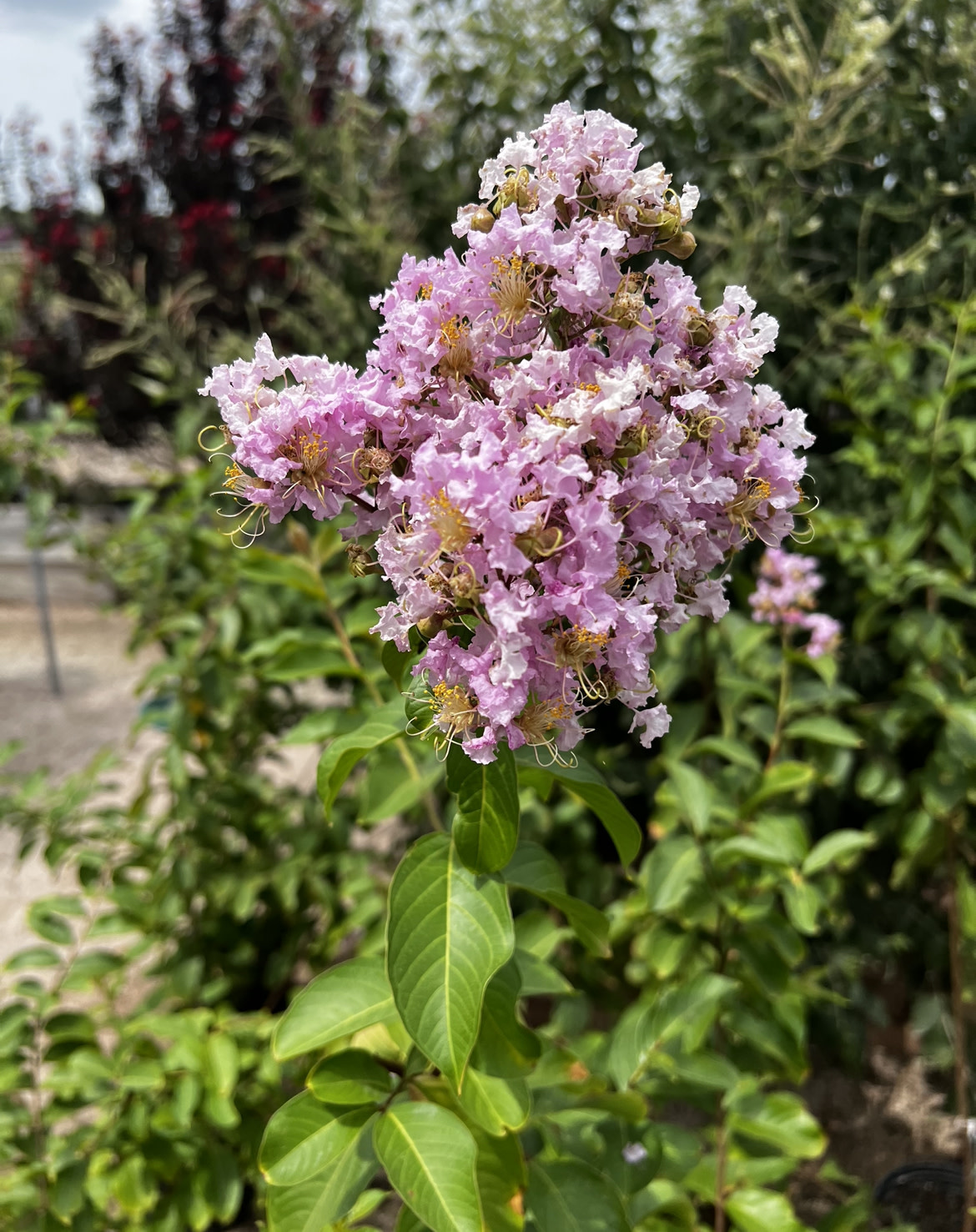
| Description | The 'Basham's Party Pink' is widely considered the gold standard for large crape myrtles in the Houston metro area. Originally introduced locally in the 1960s, it is prized for its rapid growth and massive, airy clusters of soft lavender-pink flowers. This 30-gallon specimen offers an immediate vertical element to your landscape. Beyond the blooms, it is famous for its smooth, exfoliating bark that peels away to reveal a rich, cinnamon-colored trunk. It is highly resistant to powdery mildew and thrives in our humid Gulf Coast climate and heavy clay soils. |
| Exposure | Full Sun (6+ hours daily for best blooming) |
| Height x Width | 20' - 30' Height x 15' - 20' Width |
| Water | Low to Moderate; very drought tolerant once established, but benefits from deep watering during extreme Texas droughts. |
| Zones | 7 - 10 |
| Fertilization | Apply a general-purpose fertilizer in early spring. Avoid over-fertilizing, which can stimulate leaf growth over flower production. |
| Pruning | Prune in late winter to remove seed pods or thin out crossing branches. Avoid "topping" to preserve the natural beauty of the bark and tree form. |
| Deer Resistance | Medium |
| Botanical Name | Lagerstroemia indica x fauriei 'Basham's Party Pink' |
| Description | The 'Basham's Party Pink' is widely considered the gold standard for large crape myrtles in the Houston metro area. Originally introduced locally in the 1960s, it is prized for its rapid growth and massive, airy clusters of soft lavender-pink flowers. This 30-gallon specimen offers an immediate vertical element to your landscape. Beyond the blooms, it is famous for its smooth, exfoliating bark that peels away to reveal a rich, cinnamon-colored trunk. It is highly resistant to powdery mildew and thrives in our humid Gulf Coast climate and heavy clay soils. |
| Exposure | Full Sun (6+ hours daily for best blooming) |
| Height x Width | 20' - 30' Height x 15' - 20' Width |
| Water | Low to Moderate; very drought tolerant once established, but benefits from deep watering during extreme Texas droughts. |
| Zones | 7 - 10 |
| Fertilization | Apply a general-purpose fertilizer in early spring. Avoid over-fertilizing, which can stimulate leaf growth over flower production. |
| Pruning | Prune in late winter to remove seed pods or thin out crossing branches. Avoid "topping" to preserve the natural beauty of the bark and tree form. |
| Deer Resistance | Medium |