0
Shopping cart
You have no items in your cartSetting
Language
Currency
| Botanical Name | Taxodium distichum |
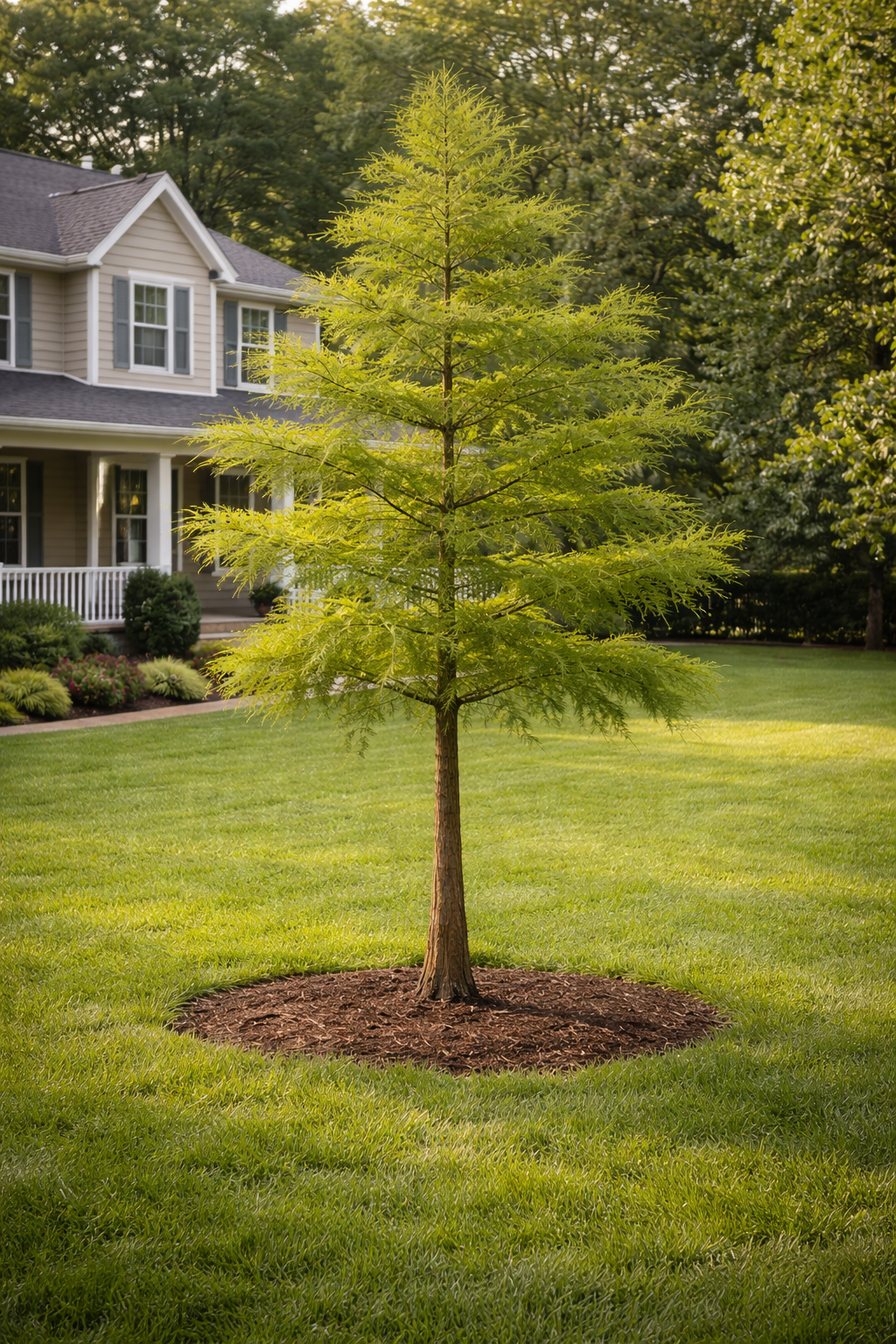
| Description | The Bald Cypress Tree is a champion of the Houston metro area landscape. This 30-gallon (30G) specimen is perfectly adapted to our heavy clay soils and high humidity. While it is famous for growing in standing water or swampy low spots, it is surprisingly drought-tolerant once established in a residential yard. Its feathery green summer foliage provides soft texture and transforms into a stunning rust-copper color in the autumn. |
| Exposure | Full Sun |
| Height x Width | 50-70' Height x 20-30' Width |
| Water | High; loves moisture and is the best choice for areas with poor drainage or seasonal flooding. |
| Zones | 4 - 10 |
| Fertilization | Apply a balanced slow-release fertilizer in early spring. Acidifying fertilizers can help prevent chlorosis in higher pH soils. |
| Pruning | Minimal; only prune to remove dead wood or to maintain a single central leader. |
| Deer Resistance | Moderate |
| Botanical Name | Taxodium distichum |
| Description | The Bald Cypress Tree is a champion of the Houston metro area landscape. This 30-gallon (30G) specimen is perfectly adapted to our heavy clay soils and high humidity. While it is famous for growing in standing water or swampy low spots, it is surprisingly drought-tolerant once established in a residential yard. Its feathery green summer foliage provides soft texture and transforms into a stunning rust-copper color in the autumn. |
| Exposure | Full Sun |
| Height x Width | 50-70' Height x 20-30' Width |
| Water | High; loves moisture and is the best choice for areas with poor drainage or seasonal flooding. |
| Zones | 4 - 10 |
| Fertilization | Apply a balanced slow-release fertilizer in early spring. Acidifying fertilizers can help prevent chlorosis in higher pH soils. |
| Pruning | Minimal; only prune to remove dead wood or to maintain a single central leader. |
| Deer Resistance | Moderate |